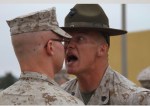
For any soldier who put on government issue white boxer shorts or had his head shaved to the skin in the first few days of Basic Training, these words are forever etched in your mind…
“I CAN’T HEAR YOU, TRAINEE!”
Whether inches from your face or in front of the assembled company, be it a Drill Sergeant or Officer, regardless if we were already at the high end of a decibel scale, our replies were never loud enough, hence…
“I CAN’T HEAR YOU, TRAINEE!”
Why? Harassment? No, the military trains young men and women to be soldiers, and soldiers need to respond with certainty, confidence and INTENT.
Following months of training, we became soldiers, found our voices and took on our missions with INTENT
Fast forward decades later, and the drill sergeant has been replaced with a speech pathologist who sends the same message but with a softer tone…
“I can’t hear you, Steve.”
I have Parkinson’s Disease and one mark of many Parkinson’s patients is a softening of the voice associated with an expressionless face. Thankfully, there’s help, speech therapy.
I suspected there was an issue with my voice and it festered until I found the right people to help me. After a month of therapy sessions, I’m happy to report that I’m on the right track to returning my voice to appropriate audible levels. I understand the importance of ‘speaking with INTENT’ and, if I waiver, I have a ‘toolbox’ to correct myself.
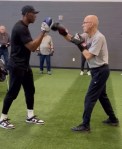
Just as I exercised my body in Basic Training to build strength and endurance, now I’m exercising my voice box to strengthen my speech. Instead of daily runs, countless push-ups, jumping jacks and the rest of the army’s ‘daily dozen’, I’m exercising my voice with ‘speak out exercises’ and reaching decibel levels that heretofore were routine and automatic
It’s challenging
And, like the physical military exercise, if I don’t make my vocal exercises a regular routine, the voice will soften, again. The program is ‘SPEAK OUT, Speaking With Intent’ and the local effort is part of a nationwide practice to teach Parkinson patients how to fight back.
The challenge is to be aware of my speech and apply vocal exercises on a daily basis to improve and maintain voice quality.
Parkinson is a slowly progressive neurological disease that afflicts each patient differently. It can impact speech, motor skills and memory over time. Other than a pill, a recommended course of action is to ‘fight back’ with rigorous physical exercise for the body and voice.
Big movements! Big voices! Big rewards!
And there’s no need to yell, “YES, DRILL SERGEANT”, a simple “thank you, Jaime and Heather” will suffice.
Steve
080124
To my two speech pathologists, Heather and Jaime (URMC), who guided me without intimidation, just INTENT.


 S'amusing